A lot of trades offer stable work. HVAC stands out because the work rarely stays still. Systems change, building codes shift, efficiency standards tighten, and every project depends on keeping air moving, temperatures controlled, and equipment running. That is exactly why hvac technician career opportunities continue to expand across residential service, commercial construction, industrial maintenance, and specialized system work.
For workers, that creates more than just job openings. It creates options. You can start in installations, move into diagnostics, specialize in controls, step into supervision, or build a path toward estimating, project management, or business ownership. For employers, it means the hiring bar is high. Technical ability matters, but so do reliability, certifications, safety habits, and proof that someone can perform in the field.
Why HVAC technician career opportunities keep growing
HVAC work sits at the center of how buildings function. Homes need heating and cooling. Office buildings need ventilation and controls. Hospitals, schools, warehouses, labs, and data centers all depend on climate systems that cannot afford long periods of downtime. When systems fail, people notice fast.
That demand is part of the reason HVAC remains one of the stronger skilled trade career paths in the US. New construction creates installation work. Aging infrastructure creates retrofit work. Preventive maintenance contracts create recurring service work. Energy efficiency upgrades create demand for technicians who understand modern equipment and system performance.
There is also a workforce factor. Many experienced tradespeople are aging out of the field, while employers still need qualified replacements who can step onto a jobsite and contribute quickly. That creates openings for entry-level workers willing to train and for experienced technicians who can prove they are ready for bigger responsibility.
The main paths inside HVAC
Not every HVAC technician does the same job. That matters if you are choosing a direction or trying to hire for a specific need.
Residential service and installation
This is where many technicians start. The work usually includes furnaces, air conditioners, heat pumps, ductwork, thermostats, and system replacements. Residential service can build strong troubleshooting skills because you deal directly with homeowners, tight spaces, varied equipment, and urgent repair calls.
The trade-off is that schedules can be unpredictable during peak summer and winter seasons. Customer communication matters just as much as technical skill.
Commercial HVAC
Commercial work often involves larger rooftops, split systems, packaged units, ventilation systems, and more complex control setups. Technicians in this space may work on schools, retail centers, office buildings, and multifamily properties.
For many workers, commercial HVAC offers a clear path to higher pay because systems are larger, projects are more technical, and downtime costs the client more. The expectations rise with that pay. Employers want techs who understand safety protocols, documentation, and jobsite coordination.
Industrial and facilities maintenance
Industrial HVAC can involve process cooling, boilers, chillers, large air handling units, and facility-wide systems. These roles are often tied to manufacturing plants, hospitals, campuses, and mission-critical buildings.
This path can be attractive for technicians who want steadier schedules and long-term employment with one company or facility. It also demands deeper technical knowledge. A technician who can diagnose system issues without guesswork becomes extremely valuable in this environment.
Controls and building automation
This is one of the strongest growth areas in the field. As buildings become smarter, HVAC technicians with controls knowledge can move beyond mechanical service into system integration, sensors, programming support, and performance optimization.
It is a good fit for workers who like both fieldwork and technology. It also gives employers a reason to compete for talent because the pool of technicians who understand both HVAC fundamentals and automation is still limited.
What employers actually look for
Experience still carries weight, but it is not the whole story. A technician with five years in the trade may not be the right fit if the work history is unclear, certifications are outdated, or there is no proof of project quality.
Employers typically want some mix of hands-on installation or service experience, EPA certification, safety awareness, clean communication, and the ability to work independently without creating callbacks. In commercial and industrial settings, they may also look for exposure to controls, refrigeration, chillers, boilers, or preventive maintenance systems.
For newer workers, the fastest way to stand out is not to claim everything. It is to show verified basics clearly. Apprenticeship hours, school training, licenses, certifications, completed projects, and references all reduce uncertainty for hiring managers.
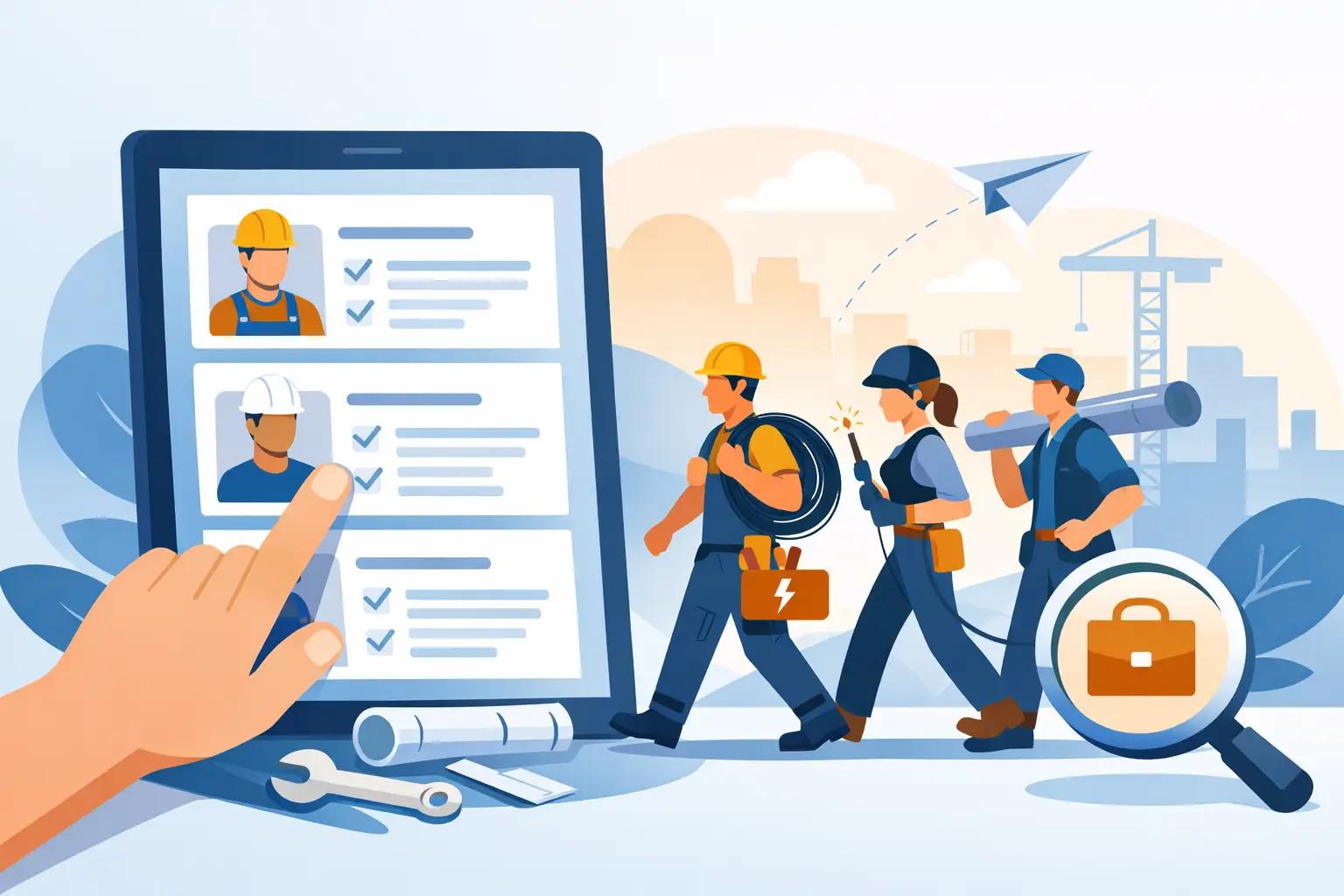
That is one reason trade-specific hiring platforms matter. In a market where speed matters, employers do not want to spend days sorting through generic resumes that say little about field ability. They want verified workers, visible credentials, and enough project history to make a confident decision.
Pay, progression, and the real upside
HVAC can be a solid earning path, but pay depends on location, licensing, specialization, and whether the role is residential, commercial, or industrial. Entry-level workers usually start with installation support, maintenance tasks, and supervised service work. As technical range increases, so does pay.
Technicians often move up by gaining certifications, handling tougher diagnostics, and proving they can work with less oversight. A mid-career tech who can diagnose electrical issues, refrigeration problems, airflow imbalances, and control faults is in a different pay category than someone who only swaps parts.
The upside gets stronger when a technician develops a specialty. Chiller work, refrigeration, controls, TAB support, and complex commercial service often command higher wages because fewer workers can do them well. Leadership is another growth path. Lead installers, field supervisors, service managers, and project managers all commonly come out of the technician pipeline.
Some workers eventually branch into estimating, sales engineering, or independent contracting. That path is not for everyone. Running jobs or running a business means paperwork, scheduling, client management, and hiring pressure on top of technical work. Still, for technicians who want more control over income and direction, HVAC leaves that door open.
Certifications and training that can move a career forward
The baseline credential most people know is EPA Section 608 certification. For many HVAC roles, it is essential. Beyond that, local licensing requirements, OSHA training, and manufacturer-specific training can help a candidate move faster.
What matters most is matching credentials to the work you want. Residential service may reward strong customer-facing experience and equipment familiarity. Commercial employers may care more about rooftop units, controls, and jobsite safety. Industrial employers often want deeper diagnostic ability and a strong maintenance mindset.
Training does not stop once you are hired. Good technicians keep learning because equipment keeps changing. Variable-speed technology, smart thermostats, higher-efficiency systems, and building automation all raise the skill ceiling. Workers who keep up usually get more options, better pay leverage, and stronger job security.
How to build better HVAC technician career opportunities
If you are already in the trade, the next move is usually not random. It starts with how clearly you present your value.
A strong profile should show the kinds of systems you have worked on, the environments you know, the certifications you hold, and the projects you have completed. Photos, work history, licenses, and verification matter because employers need proof, not just claims. The more specific your record, the easier it is to get matched to the right role instead of wasting time on jobs that do not fit.
If you are newer to HVAC, take the long view. The first job does not need to be perfect. It needs to teach you. Look for employers who will put you around experienced techs, let you build service fundamentals, and expose you to a range of systems. Early repetition in diagnostics, installs, maintenance, and customer communication compounds quickly.
For employers, the same principle applies in reverse. If you want stronger hires, define the job clearly. Residential tune-up tech, commercial installer, refrigeration service tech, and controls technician are not interchangeable roles. Better job descriptions, credential verification, and trade-specific screening reduce turnover and speed up hiring. Platforms like go2work are built for that reality because they help employers find verified trade talent and help workers show what they can actually do.
Where the field is heading
HVAC is becoming more technical, not less. Energy efficiency standards, electrification trends, indoor air quality concerns, and smart building systems are changing the work. That does not replace field technicians. It makes skilled technicians more valuable.
The best opportunities will keep going to workers who combine core trade ability with adaptability. Employers need people who can read a jobsite, solve problems under pressure, document their work, and handle newer systems without slowing down production. That mix is hard to find and worth paying for.
If you are considering HVAC, or trying to move up in it, this is a good time to be intentional. The field has room for beginners, specialists, and future leaders. The workers who advance fastest are usually the ones who treat every install, service call, and certification as proof they are building something bigger than a job.